January 2026
What size pendant light do you actually need?
The three measurements that decide it - table width, ceiling height and drop - with the numbers worked out for 25 to 50 cm shades.
The short answer
Over a dining table, choose a shade about one third of the table’s width. Over a kitchen island, use two or three small pendants rather than one large one. In both cases hang the bottom edge 75-85 cm above the surface. Everything below is how those numbers are arrived at, and when to break them.
Over a dining table
Measure the width of the table, not the length. A 90 cm round table takes a 30 cm shade; a 120 cm table takes 40 cm; a 150 cm table takes 45-50 cm. A single shade wider than half the table starts to feel like a canopy, and one under a quarter disappears. If your table is long and rectangular, use two smaller pendants spaced at one third and two thirds of its length instead of one big one - a 200 cm table is much better served by two 30 cm shades than one 50 cm.
Over a kitchen island
Islands want repetition. Two or three pendants of 25-30 cm, spaced 70-80 cm centre to centre, light the whole working surface evenly and read as a deliberate line. Keep the outer pendants at least 30 cm in from the ends of the island so it does not look crowded. One large pendant over an island lights the middle and leaves the ends dim.
How low to hang it
Bottom edge of the shade to the top of the table: 75-85 cm. That is high enough to see the person opposite and low enough to keep the light on the food. Over an island where nobody sits facing across, you can go to 70 cm. Add roughly 8 cm of drop for every 30 cm of ceiling above the standard 2.4 m - with a 3 m ceiling, hang it about 5 cm lower than you first think, or the pendant floats.
Clearance around the shade
Allow 2.5 to 3 times the shade diameter in clear space around it. A 40 cm shade wants roughly a metre of nothing around it. This is the measurement people forget, and it is the one that decides whether the piece looks placed or crammed.
Which shape for which room
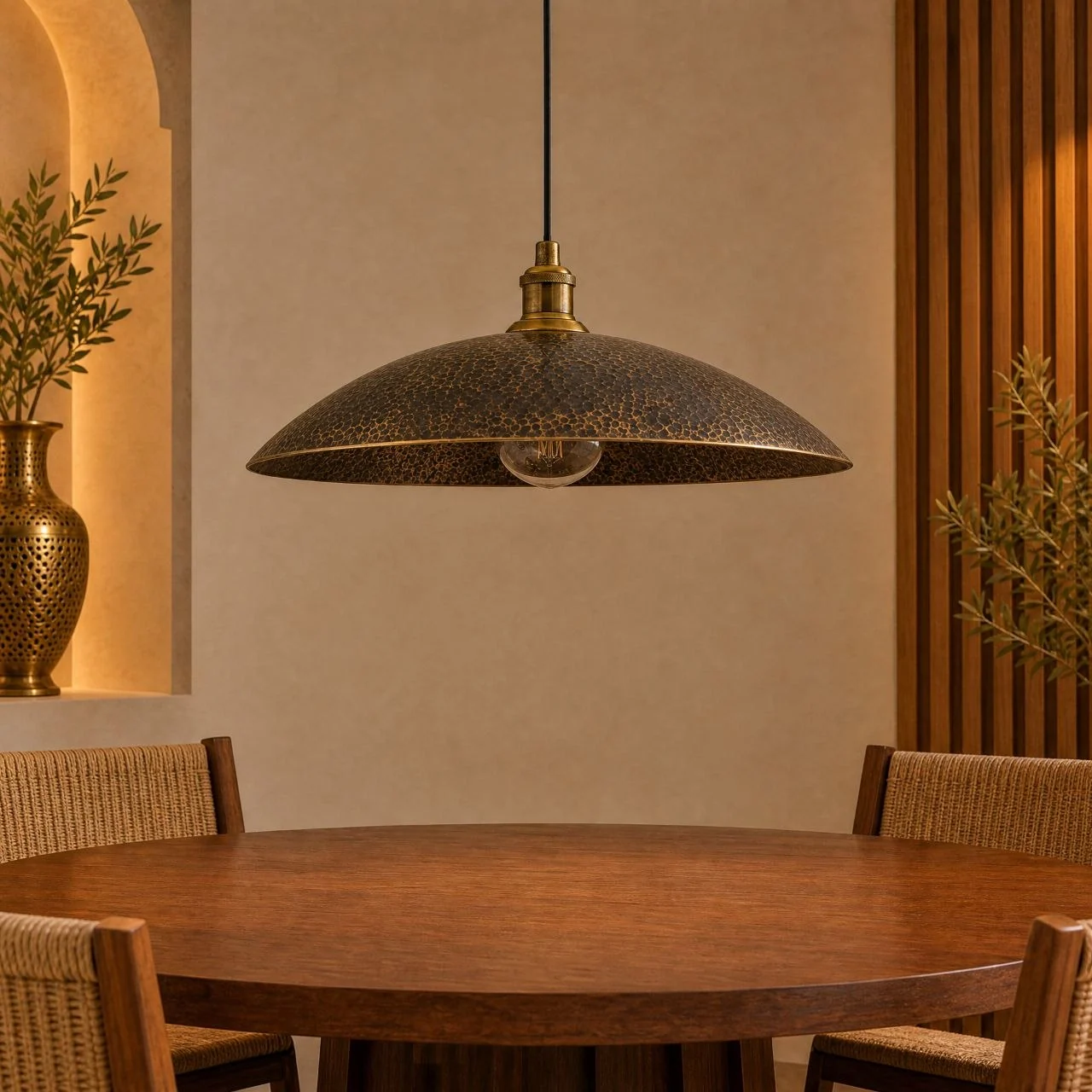
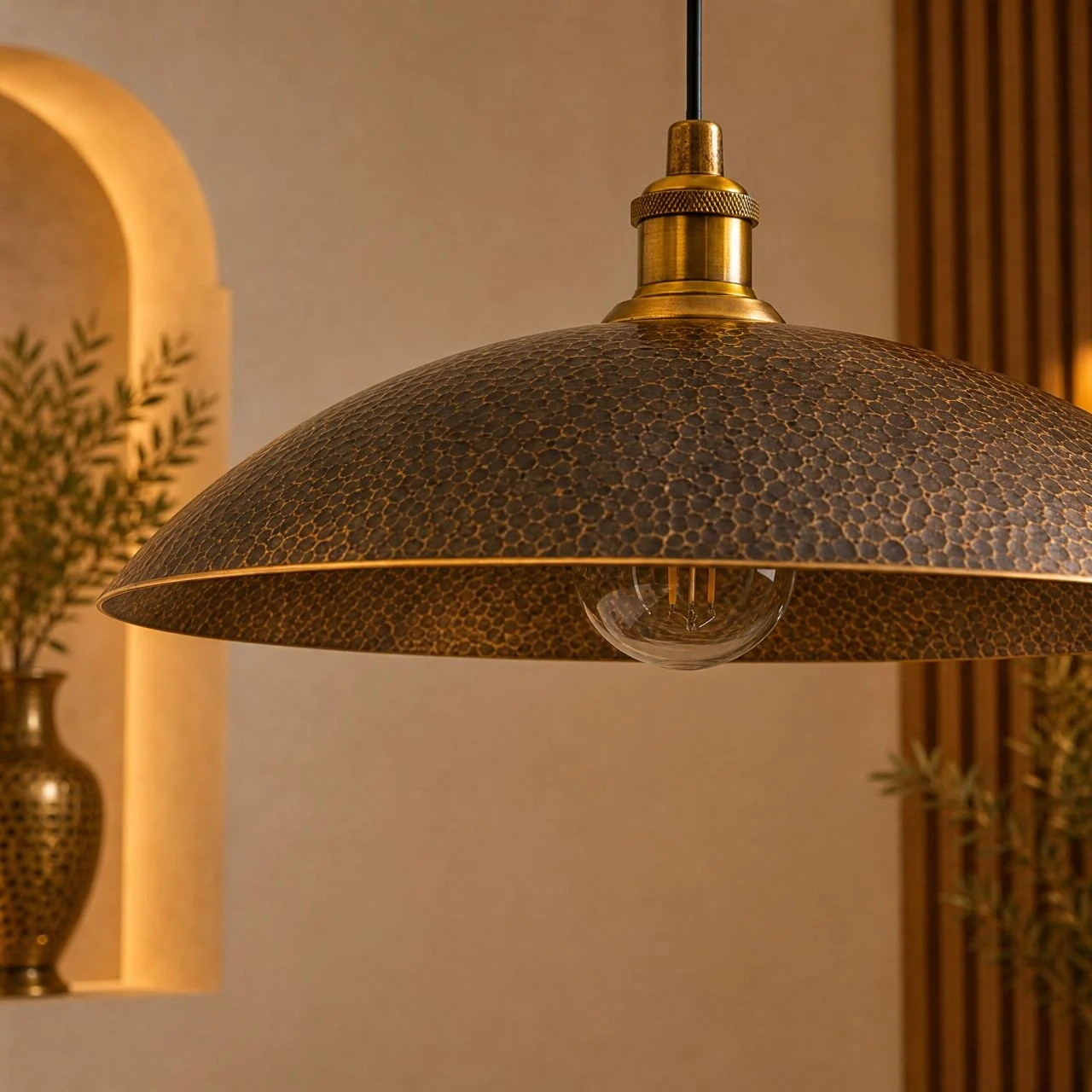
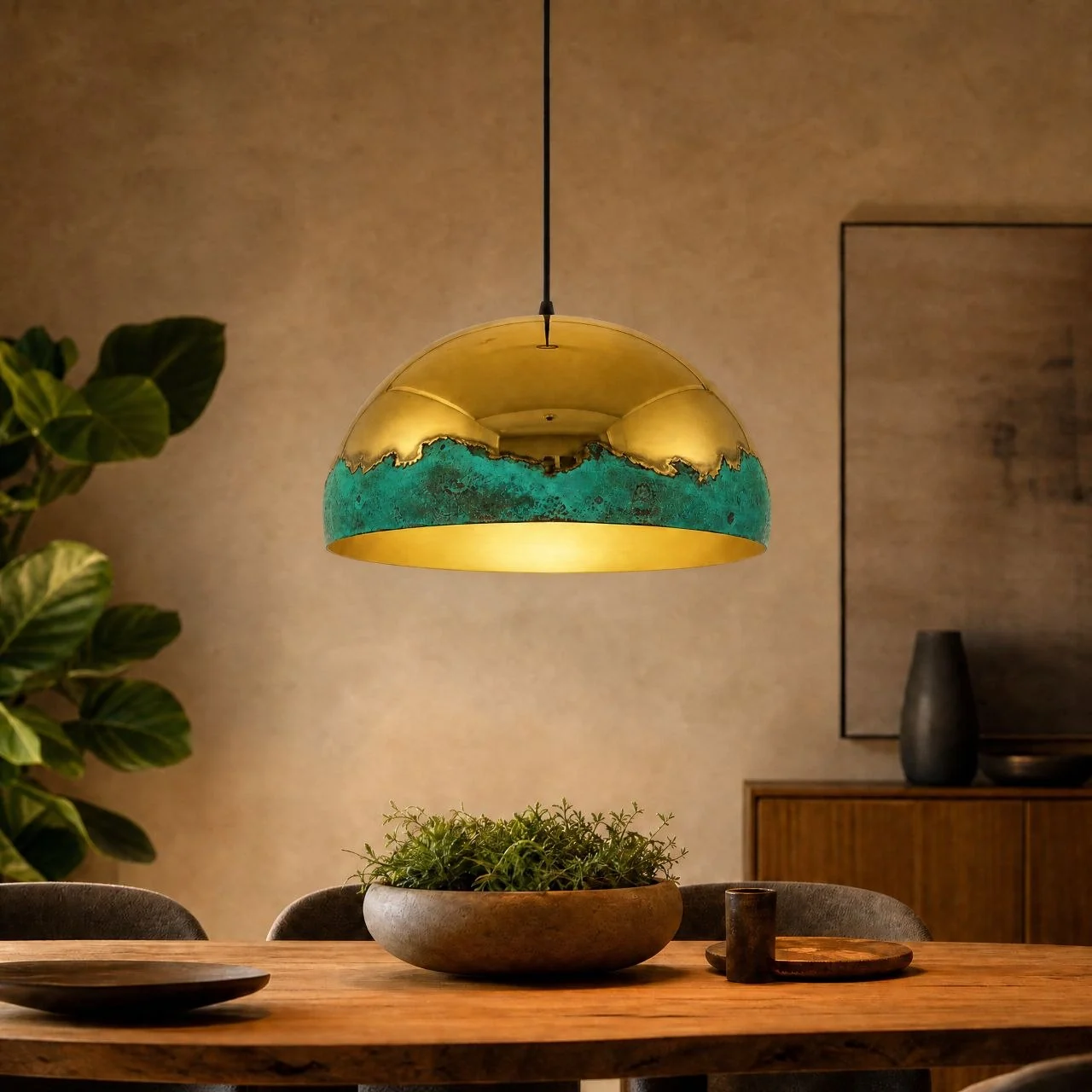
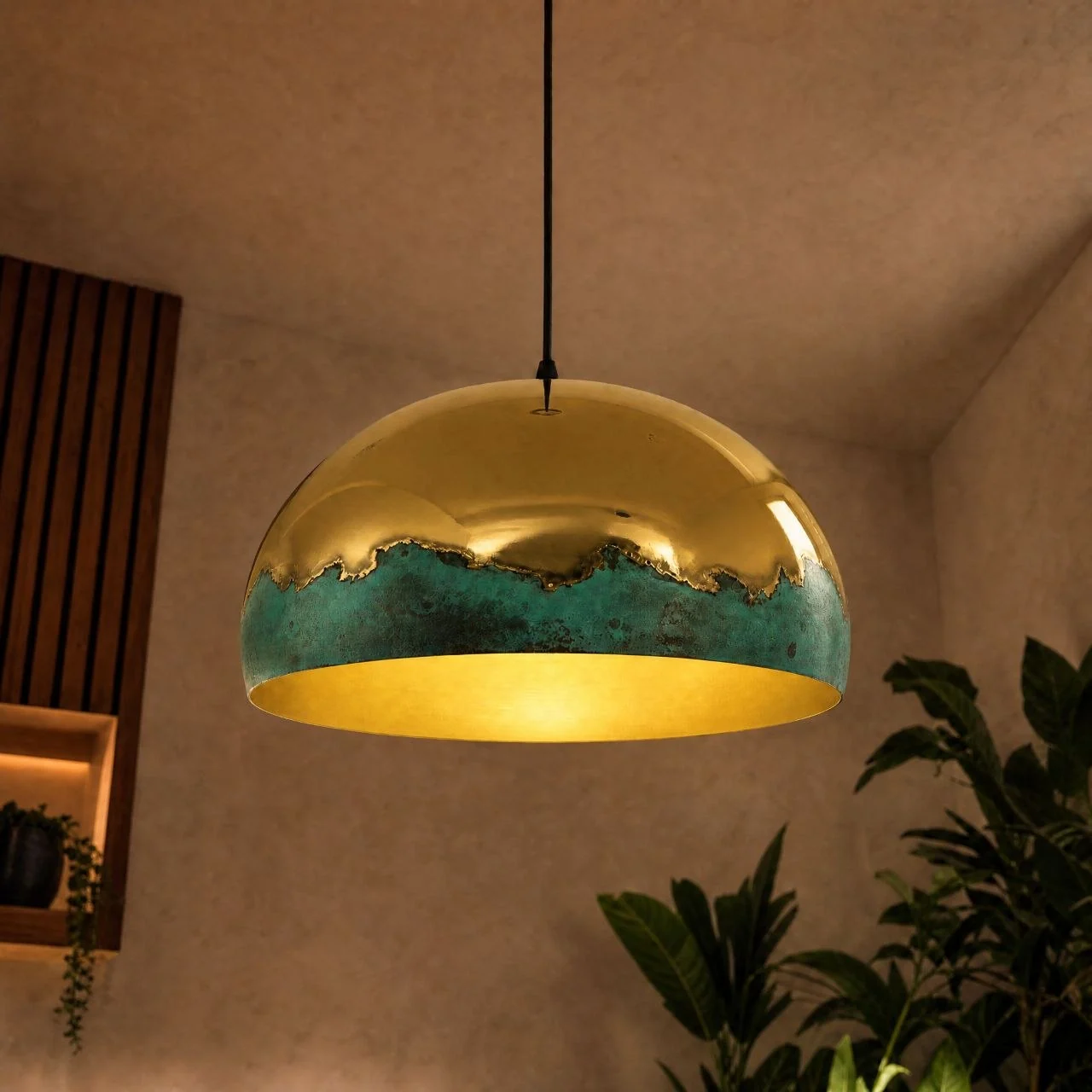
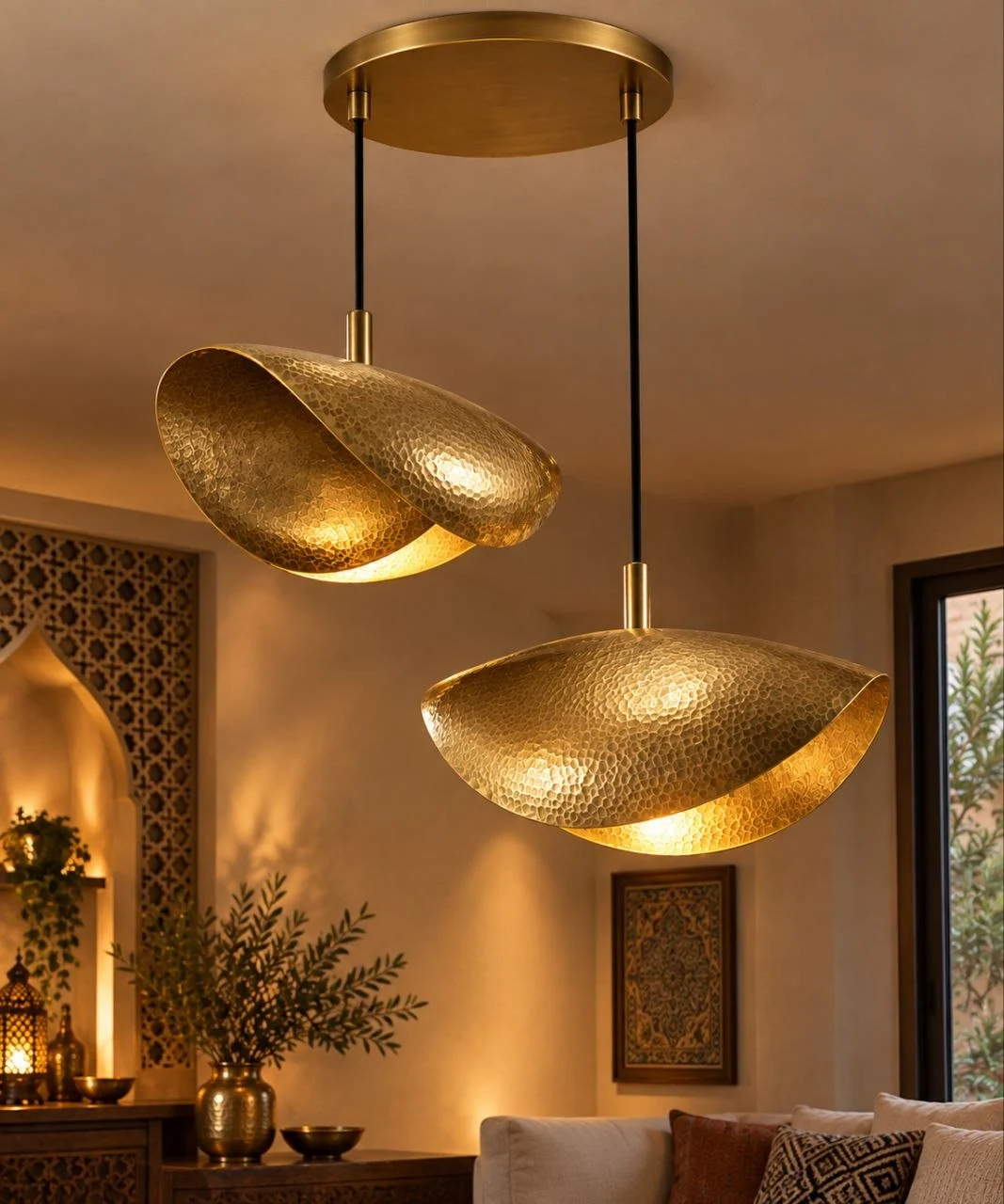
Wide shallow shades - the Sahara Wide Dome - throw a broad pool and suit dining tables. Deep domes like the Atlas Verdigris Dome concentrate light downward and suit islands and reading corners. Pierced shades throw a pattern on the ceiling and walls and are the wrong choice where you need a lit work surface, unless the base is open.
When to ignore all of this
A statement piece over an entrance or a stairwell is not doing a lighting job; it is doing a sculpture job. There, go one size larger than the maths suggests. The rules above are for rooms where someone has to see what they are eating or chopping.
The pieces in this guide
Last updated: · Copper Atlas Design, Marrakech