March 2026
Are copper sinks actually worth it?
An honest answer, including the three real drawbacks. Gauge, antimicrobial behaviour, patina, and what a copper sink is genuinely bad at.
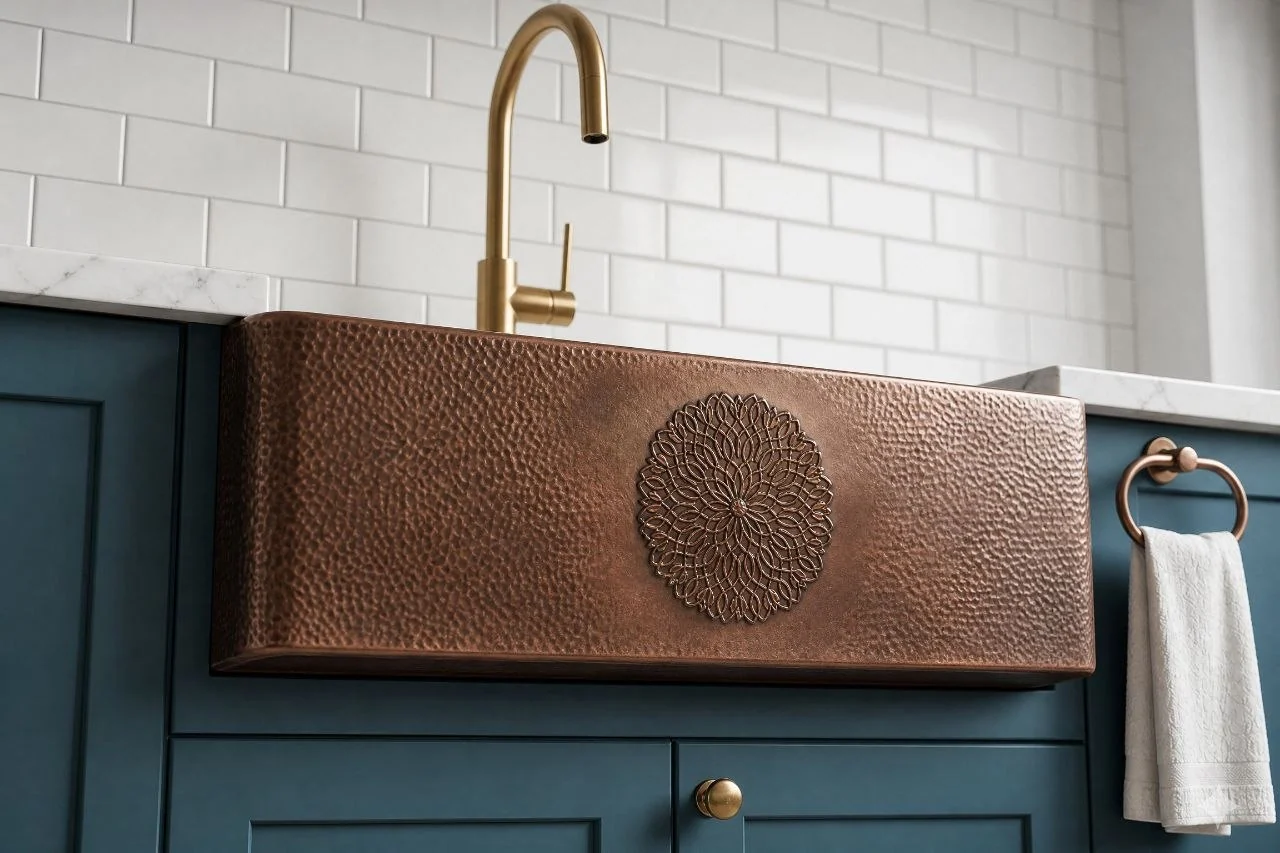
The short answer
Yes, if you accept that it will change colour and you will dry it after use. No, if you want a surface that looks identical in year five to the day it was installed. A copper sink is a living material, and that is either the point or the problem.
Gauge is the number that matters
Copper sinks are sold in gauges - the lower the number, the thicker the metal. Sixteen-gauge is roughly 1.6 mm and is what a sink should be. Cheap imported sinks are often 20-gauge, under 1 mm, and they dent when you drop a pan and drum loudly when water hits them. Every sink from this workshop is 16-gauge. Ask any seller for the gauge before the price.
The antimicrobial part is real
Copper is oligodynamic: bacteria do not survive long on a bare copper surface. The EPA registered copper alloys as antimicrobial surfaces in 2008 after testing showed better than 99.9% kill rates on several organisms within two hours. This only works on bare copper - a lacquered or plated sink has none of this property, which is one more reason not to buy a coated one.
Patina is maintenance-free, shine is not
A sink left to darken needs nothing but a rinse and a wipe. A sink kept bright needs polishing every few weeks, and each polish takes off a layer. Most people who love their copper sink stopped polishing it in the first year. Marks from hot pans and standing water fade back into a living patina within days - the surface self-heals in a way steel never does.
The three real drawbacks
First: acidic food left sitting - tomato sauce, lemon, wine - will strip a bright spot into the patina. It grows back, but it takes weeks. Second: bleach will ruin the finish, so a household that cleans with bleach should not buy one. Third: it is heavy. A 90 cm farmhouse sink in 16-gauge copper needs a properly built cabinet underneath, not a standard base unit.
What it costs over time
Nothing. There is no coating to renew, no reglazing as with fireclay, and no scratch-polishing as with steel. Copper sinks routinely outlive two kitchens. The cost is all at the front.
Farmhouse, undermount or workstation?
Farmhouse apron sinks show the metal and are the reason to buy copper at all. Undermount sinks disappear under the counter and suit a kitchen where the stone is the feature. Workstation sinks with an integrated rail are the practical choice for a small kitchen, where the sink has to double as prep space.
The pieces in this guide
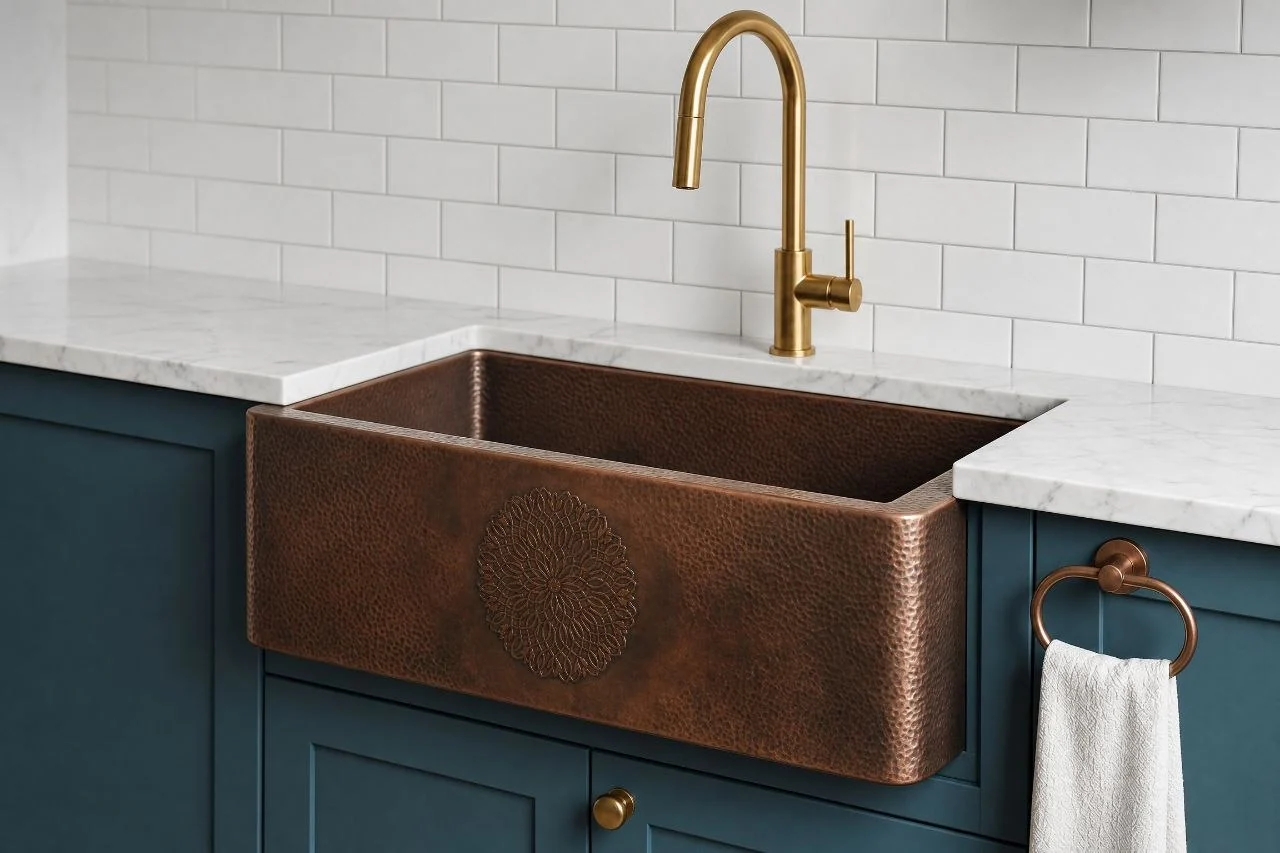
Medallion Farmhouse Sink
Price on requestApron front, single medallion, sixteen-gauge copper
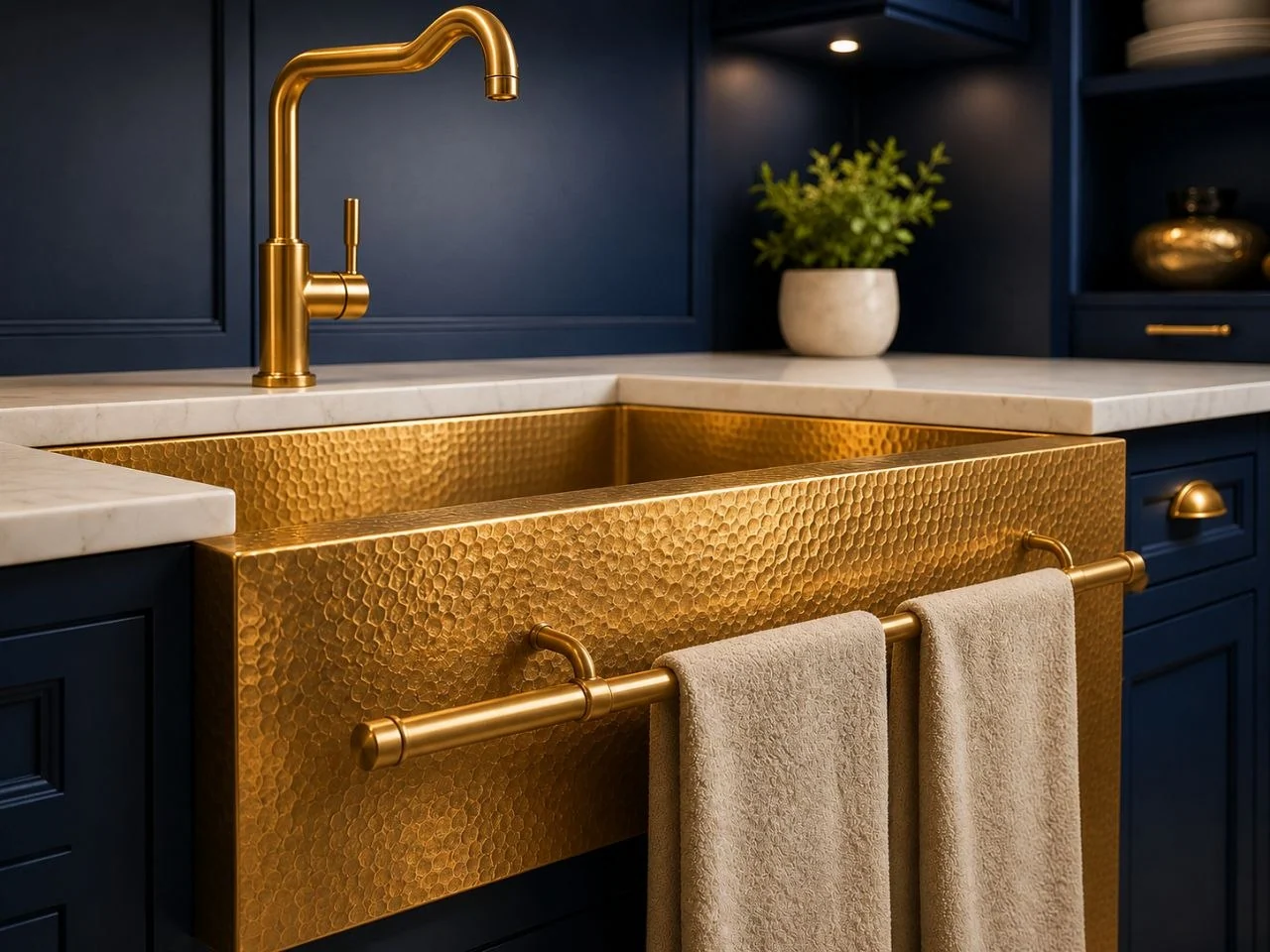
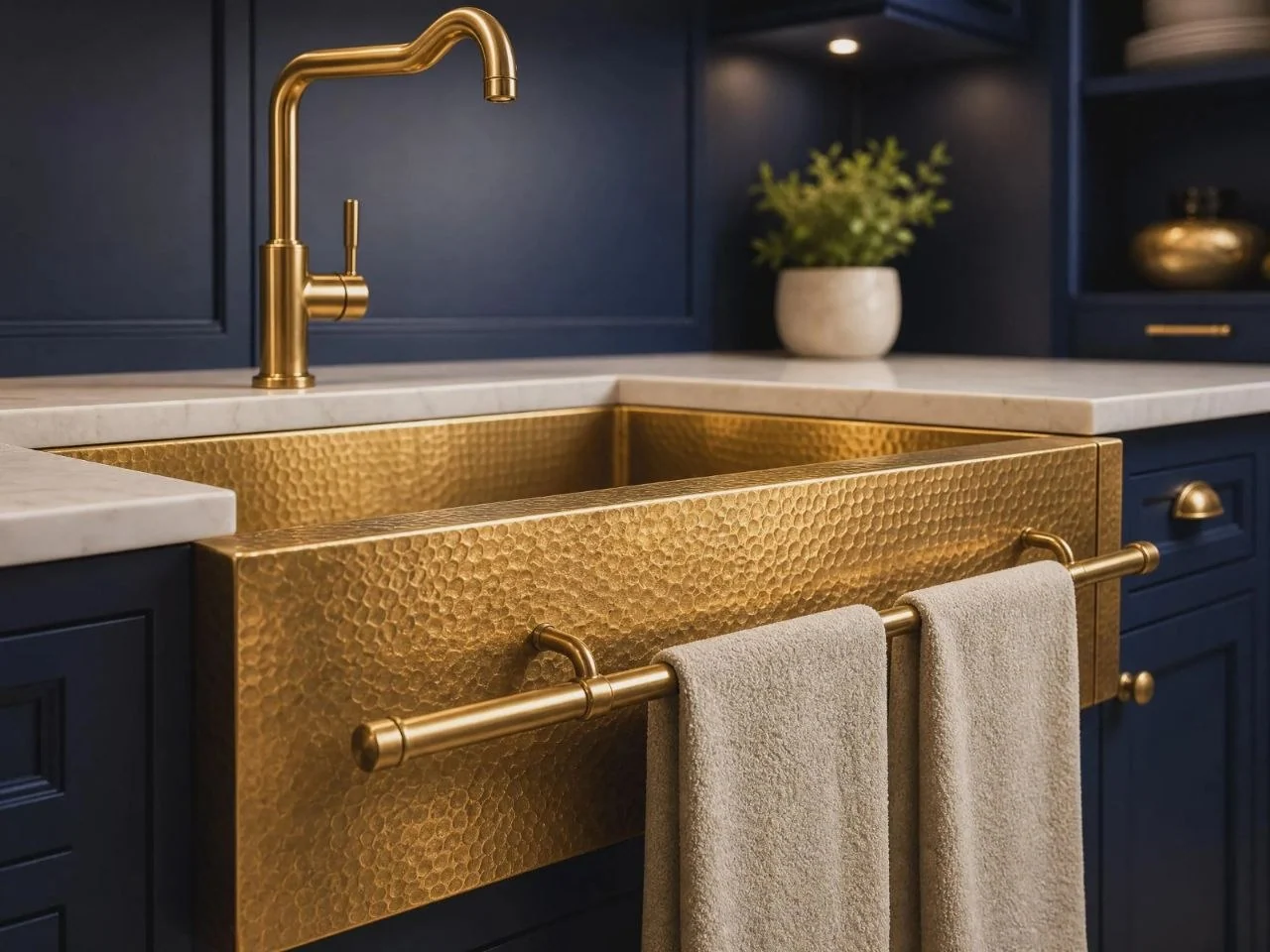
Atlas Workstation Sink
Price on requestUndermount, with an integrated towel rail
 Made to order
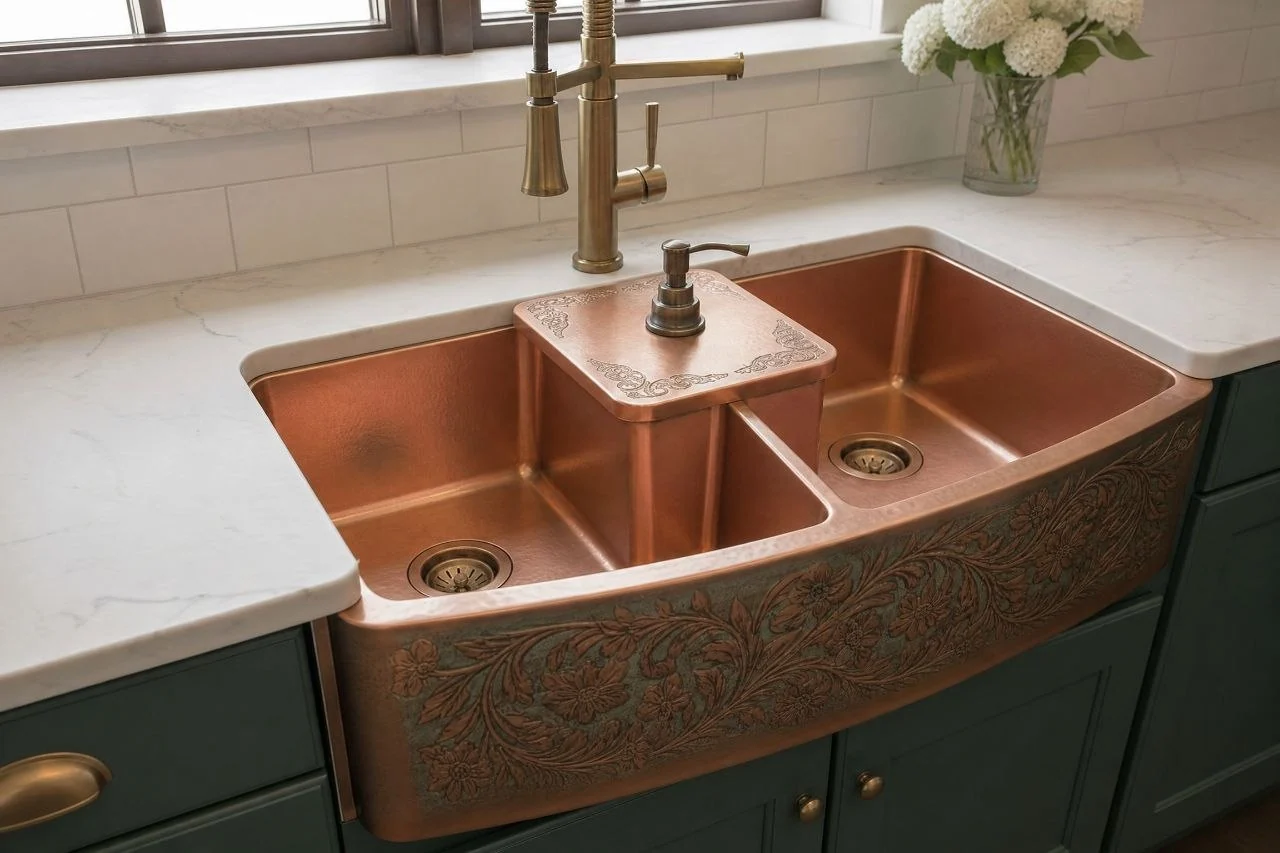
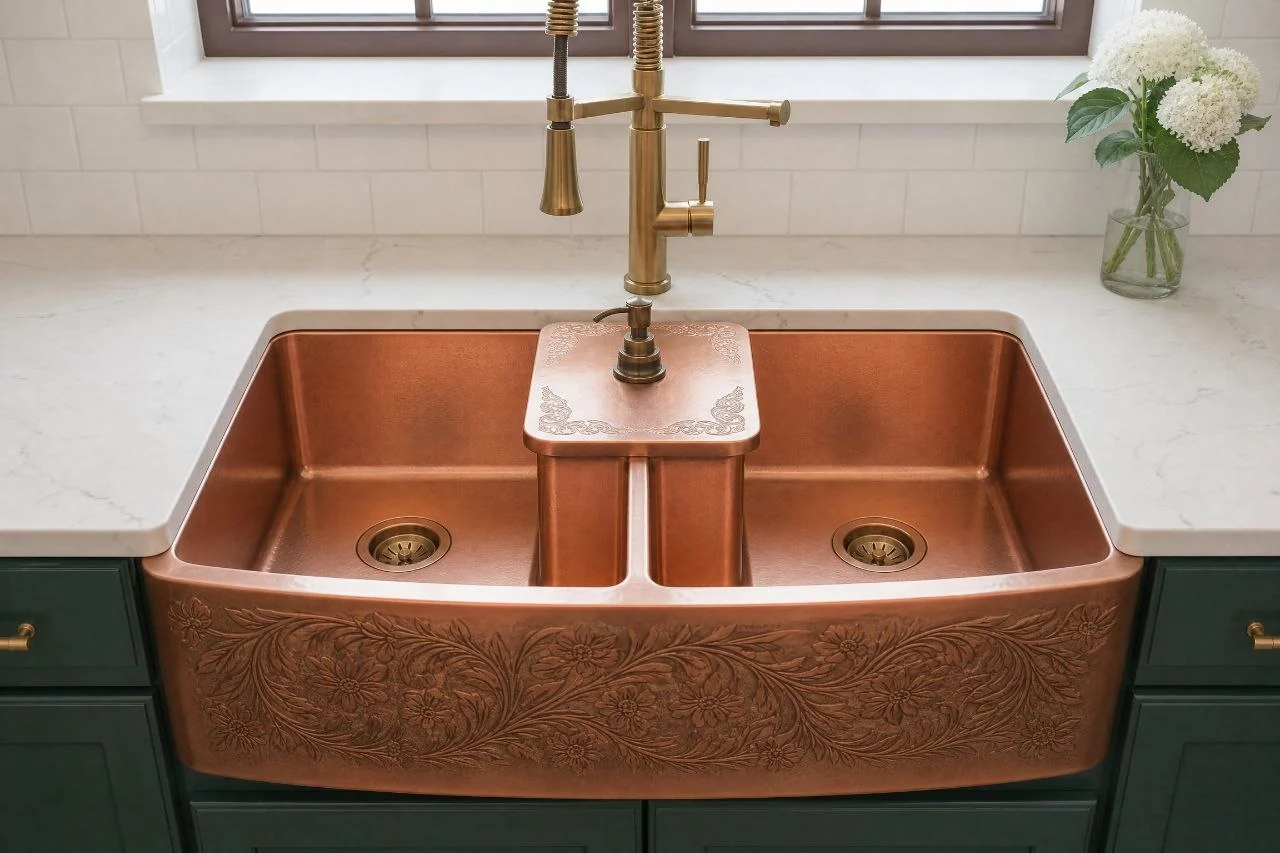
Medina Engraved Farmhouse Sink
Price on requestThe apron chased edge to edge in vine work
Last updated: · Copper Atlas Design, Marrakech